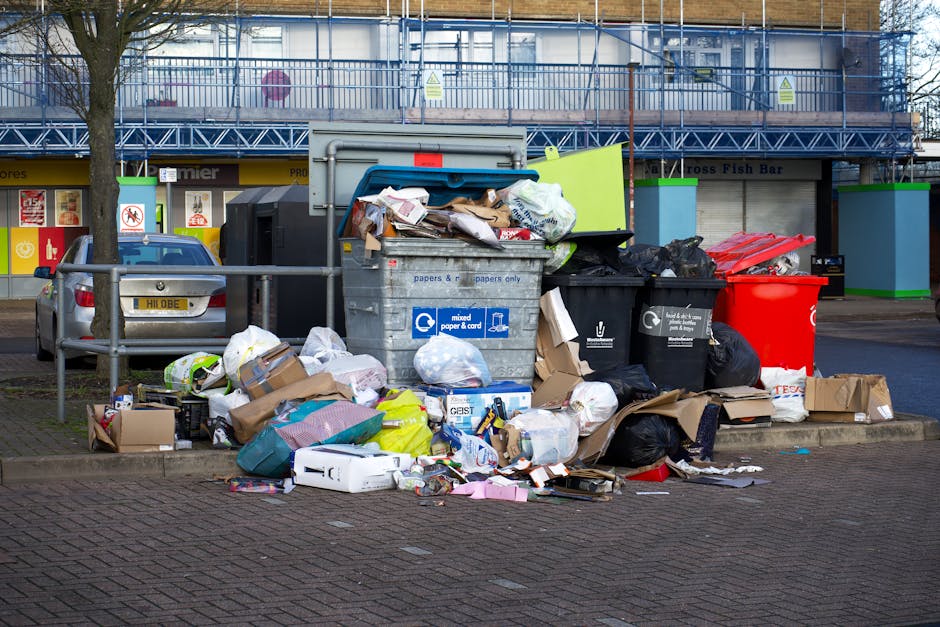
Bulky Waste in Millbank: Removal Options and Costs
Posted on 14/05/2026
If you've got an old sofa blocking the hall, a broken wardrobe in the spare room, or a mattress that somehow got heavier since you last looked at it, you're not alone. Bulky waste has a habit of sitting there quietly until it suddenly becomes the thing you can't ignore. This guide to Bulky Waste in Millbank: Removal Options and Costs explains the practical choices available, what usually affects the price, and how to avoid the usual headaches. A bit of planning goes a long way, truth be told.
Whether you're clearing a flat, getting a property ready for new tenants, or just trying to reclaim some space, the right approach depends on what you're throwing away, how quickly it needs to go, and whether any items can be reused or recycled. We'll walk through the options in plain English, so you can make a sensible decision rather than a rushed one.

Why Bulky Waste in Millbank: Removal Options and Costs Matters
Bulky waste is not just "big rubbish". It's any item that is awkward, heavy, oversized, or difficult to move with standard household waste. Think wardrobes, sofas, bed frames, desks, dining tables, exercise equipment, broken appliances, and garden furniture. In a place like Millbank, where flats, managed buildings, shared entrances, and tight stairwells are common, disposal gets tricky fast.
Why does this matter so much? Because the wrong approach can cost you time, money, and a sore back. It can also create building issues if items are left in communal areas, damage walls or lifts, or lead to avoidable service charges. The difference between a smooth collection and a stressful one is often just preparation and choosing the right service.
There's also the environmental angle. Reuse and recycling should always be considered before sending anything to disposal. A solid bulky waste plan can reduce landfill, recover usable materials, and keep things moving in a cleaner, more responsible way. If you're already thinking about decluttering before a move, the decluttering guide for a smoother move is a useful companion read.
Key point: bulky waste removal is not just about getting rid of things. It's about doing it safely, legally, and in a way that suits the property, the item, and your schedule.
How Bulky Waste in Millbank: Removal Options and Costs Works
At a practical level, bulky waste removal usually follows one of four routes: self-transport, council collection, man-and-van removal, or a full removal service that can handle lifting, loading, and disposal for you. The right option depends on quantity, access, item type, and how quickly you need it gone.
Costs usually vary based on a handful of things:
- Volume: one sofa costs less to remove than a full flat of mixed furniture.
- Weight: heavier loads often need more labour and vehicle space.
- Item type: mattresses, white goods, and mixed waste can have different handling needs.
- Access: stairs, narrow corridors, no lift, or parking restrictions can increase the work involved.
- Urgency: same-day or short-notice collection typically costs more.
- Disposal route: items suitable for reuse or recycling may be handled more efficiently than mixed rubbish.
In Millbank, access is often the hidden cost. A ground-floor collection with clear parking is one thing. Carrying a bulky wardrobe down several flights in a busy block, without a lift, is another story entirely. The labour is what you're paying for as much as the van itself.
If bulky waste removal is part of a wider move, it can make sense to combine it with other services. For example, a man with a van in Millbank can be a flexible choice for mixed loads, while furniture removals in Millbank may suit heavier household items that need extra care. For larger projects, the broader removal services overview helps you see where bulky waste fits into the bigger picture.
Key Benefits and Practical Advantages
The biggest benefit is simple: less stress. But there are a few more practical advantages worth spelling out.
- Safety: heavy lifting is where people often get hurt, especially with awkward items and poor grip points.
- Speed: a planned collection clears space far faster than trying to piece together trips to a tip or recycling point.
- Convenience: you avoid hiring a vehicle, loading it yourself, and making multiple runs.
- Compliance: using a proper disposal route reduces the risk of items being fly-tipped or dumped incorrectly.
- Cleaner properties: this matters a lot before moving out, letting a flat, or starting a refurb.
There's also a very real emotional benefit. An empty corner where an old sofa used to sit can make a room feel twice as big. A cleared hallway makes every next step easier. It sounds minor, but anyone who's tried to squeeze past a broken chest of drawers for three weeks will know exactly what I mean.
And if you're dealing with particularly awkward objects, some planning goes a long way. Our article on safe solo heavy lifting is handy if you're deciding what should never be moved alone. For especially delicate or tricky items, it can be worth reading about why some moves really do need professionals.
Who This Is For and When It Makes Sense
Bulky waste removal is useful for quite a wide range of people in Millbank. It's not just for landlords or people in the middle of a huge house clearance.
- Residents in flats: especially where stair access is tight or storage space is limited.
- Landlords and agents: for end-of-tenancy clear-outs and preparing a property for the next occupant.
- Families downsizing: when older furniture no longer fits the next place.
- Students: when moving out and dealing with unwanted furniture or mismatched items. The student removals page for Millbank is relevant here if you're bundling disposal with a move.
- Small offices: desks, chairs, filing units, and broken equipment often build up quietly.
- Home renovators: during kitchen upgrades, redecorating, or pre-sale prep.
It makes sense when the cost and effort of doing it yourself start to outweigh the convenience of a professional collection. If you only have one small item and easy access to a vehicle, self-disposal may be enough. But if the item is bulky, awkward, or time-sensitive, the maths usually changes pretty quickly.
One quick reality check: if you're on a tight deadline, or if the item won't fit in a standard lift, do not underestimate the lifting and manoeuvring involved. That's where a calm, organised approach saves the day. The guide to a calm house move has some very transferable ideas here.
Step-by-Step Guidance
If you want to keep costs under control, follow a simple process. Nothing fancy. Just a method that avoids last-minute chaos.
- List the items clearly. Write down what needs removing, including approximate sizes if possible. A "big wardrobe" description is less useful than "three-door wardrobe, particleboard, second floor".
- Separate reusable, recyclable, and disposable items. This helps the collection provider plan the right route and can reduce wasted disposal capacity.
- Check access. Look at stairs, lifts, parking, and any building restrictions. In Millbank, this can make a surprisingly big difference to the quote.
- Take photos. A few clear images help avoid misunderstandings, especially for mixed loads or awkward furniture.
- Decide on the service level. Do you need simple collection, lifting from inside the property, or a full clear-out?
- Request pricing in advance. Good pricing should be explained in plain terms. If it isn't, ask what is included and what would count as an extra charge.
- Prepare the space. Clear a path, protect floors if needed, and make sure the team can reach the items easily.
- Confirm the disposal route. Ask whether items will be reused, recycled, or disposed of responsibly. That question matters.
If you're also packing for a move, don't leave it all until the last evening. A bit of structure saves a lot of faffing about later. Our packing step-by-step guide is useful for that wider prep, and the packing and boxes service in Millbank can help if you need materials sorted properly.
Small but important detail: if an item is fragile, contains sharp edges, or has loose parts, secure it before moving day. A wobbly shelf or dangling panel can turn a quick job into a tedious one. Nobody wants that at 8:15 on a wet Tuesday.
Expert Tips for Better Results
Here's where a bit of lived-in experience helps. The smoothest bulky waste jobs usually have three things in common: clear information, easy access, and realistic expectations.
- Bundle similar items together. A single sofa is easier to price than a random pile of mixed materials.
- Measure doors and stair turns. A wardrobe that fits in the room may still be awkward at the exit.
- Keep a "do not take" pile separate. It sounds obvious, but in a busy clear-out things can get mixed up quickly.
- Be realistic about lifting weight. Some furniture feels manageable until it's halfway through a narrow landing.
- Use the right help for the job. A flexible vehicle option may be enough for one collection, while larger clearances may need a more structured service.
If you are clearing items before storing other belongings, there is often a smarter sequence. Remove bulky waste first, then decide what stays, what goes into storage, and what needs protective packing. For example, a sofa that's still in good condition might be better suited to careful long-term sofa storage than disposal. Likewise, if you're juggling old appliances, our guide on storing a freezer safely when it's idle is a neat reference point.
A little humour never hurts either: the "I'll just move it myself" plan has broken more backs, scratched more walls, and caused more muttered apologies than most people admit. Better to plan once than regret it twice.

Common Mistakes to Avoid
Most problems with bulky waste are preventable. The awkward part is that the mistakes feel small right up until they become expensive.
- Not checking what the quote includes. A cheap-looking price can hide access charges or labour extras.
- Leaving items in a shared hallway. This can create safety issues and may breach building rules.
- Assuming everything can be dumped together. Different materials may need different handling.
- Trying to lift too much at once. That "just one more shove" moment is where accidents happen.
- Ignoring parking and access. A van that can't get close enough adds time and effort immediately.
- Forgetting to sort valuables first. Old drawers and cupboards are famous for hiding small important things.
There's also the "we'll sort it later" approach. That one is sneaky. It starts as a temporary pile and becomes a permanent obstacle. If your clear-out is linked to moving out, it's worth reading how to create a spotless environment before departing. It's a useful reminder that final-stage clearances often affect how smoothly the rest of the move goes.
Tools, Resources and Recommendations
You do not need specialist gear for every job, but a few basic tools make bulky waste removal safer and tidier.
- Work gloves: useful for grip and for protecting hands from splinters, dust, or sharp edges.
- Measuring tape: helps confirm whether items will fit through doors or down stairs.
- Furniture sliders or blankets: helpful for protecting flooring and easing movement.
- Label tape and marker: good for sorting what stays, what goes, and what needs dismantling.
- Camera phone: take quick photos for quotes and to check item condition before removal.
- Dismantling tools: only if needed and only if you're confident doing the job safely.
On the service side, it helps to choose a provider that is clear about pricing, insured appropriately, and able to explain what happens to the items after collection. If you want to understand what sits behind a well-run operation, the services overview, insurance and safety information, and recycling and sustainability approach are all sensible places to look.
If your project is more than a simple lift-and-load, it may also be worth comparing broader removal support. The Millbank removals service can be relevant when bulky waste is just one part of a larger transition, such as moving home, office changes, or clearing furniture in stages.
Law, Compliance, Standards, or Best Practice
Without getting tangled up in legal jargon, the main thing to know is that waste should be handled responsibly and passed to the right route. In the UK, that generally means using a legitimate collector, keeping waste traceable where appropriate, and avoiding fly-tipping or unlicensed disposal. You do not want your old wardrobe ending up somewhere it should never be. That would be an expensive nuisance, and frankly unfair to everyone else.
Good practice also includes:
- Checking the provider's reputation and process.
- Making sure the collection team knows exactly what is being removed.
- Keeping hazardous or specialist items separate. Certain waste types need special handling and should not be mixed casually with furniture or general bulky items.
- Using clear documentation where needed. Especially useful for landlords, managing agents, and office clearances.
For business users, the expectation is usually a little stricter. Office clear-outs may need more careful item tracking, and working safely around corridors, lifts, and shared entrances matters a lot. If that sounds like your situation, the office removals page is worth a look alongside a disposal plan.
Best-practice note: choose a service that can explain the end destination of your bulky waste in straightforward terms. If they sound vague, keep asking. A trustworthy provider won't mind.
Options, Methods, or Comparison Table
Here's a simple comparison of the most common bulky waste removal options in Millbank. The "best" choice depends on how much work you want to do yourself.
| Option | Best for | Typical strengths | Possible drawbacks |
|---|---|---|---|
| Self-transport | One or two items, easy access, available vehicle | Can be cheaper if you already have transport | Heavy lifting, loading stress, more time, fuel and parking hassle |
| Council-style collection | Simple, eligible items and non-urgent timing | Convenient for straightforward jobs | May have item restrictions, waiting times, and limited flexibility |
| Man and van collection | Mixed loads, awkward furniture, flexible timing | Practical, often quicker, better for access issues | Pricing depends heavily on volume, access, and labour |
| Full removal service | Large clear-outs, multiple items, property moves | Most hands-off option, useful for complex jobs | Usually the highest cost if you only have one item |
To be fair, the comparison is not really about "cheap versus expensive" alone. It's about what saves you the most total effort. If you have stairs, no lift, and a bulky mattress, a slightly pricier service can end up being the calmer and smarter choice.
Case Study or Real-World Example
Picture a typical Millbank flat clearance after a tenancy ends. The resident has a sofa, a broken coffee table, two dining chairs, and an old desk to remove. On paper, it sounds like a manageable DIY job. Then you remember the narrow hallway, the small lift that barely fits one person with a shopping bag, and the fact that parking outside is not exactly generous.
In that scenario, the initial cheapest option can become the most tiring one. A self-run trip may require dismantling items, repeated loading, and a lot of awkward carrying. A better route is often a man-and-van style collection or a broader removal service, especially if the items must be taken from inside the property rather than left outside.
What usually makes the biggest difference is preparation. When the items are listed clearly, access is explained in advance, and the team knows which pieces need lifting from which floor, the job tends to run smoothly. The van arrives, the route is clear, and the whole thing is done without that frantic last-minute scramble. Simple, really.
This is also where a wider home-move plan helps. If you're already sorting storage, packing, and removals, combining tasks can reduce duplicate handling. The storage options in Millbank may help if some items are worth keeping but not in the property just yet.
Practical Checklist
Use this checklist before booking your bulky waste collection.
- Make a full list of the items to be removed.
- Separate anything you want to keep, donate, or store.
- Measure large items and note any awkward dimensions.
- Check stairs, lifts, parking, and access restrictions.
- Take clear photos for pricing and planning.
- Ask whether loading from inside the property is included.
- Confirm if dismantling is needed before collection.
- Check what happens to reusable or recyclable items.
- Ask about timing if you need same-day or next-day help.
- Keep valuables, documents, and sentimental items well out of the removal area.
If the collection is part of a rushed move, the same-day removals option in Millbank may be worth considering, especially when the schedule has gone a bit sideways. Happens more often than people admit.
Conclusion
Bulky waste in Millbank is easiest to handle when you think in terms of access, effort, timing, and disposal quality. A single item may be simple enough for self-transport, but once you add stairs, parking pressure, multiple items, or a tight deadline, a professional collection starts to make a lot of sense. The best option is usually the one that gives you a clear price, a clean process, and the least disruption to your day.
For many people, the real value lies in removing the problem completely, not just shifting it from one place to another. That's why planning, honest item descriptions, and a sensible service choice matter so much. Done well, the whole thing feels almost effortless. Almost.
Get a free quote today and see how much you can save.